The Rise of the AI: Why Travel Needs More Than Another App
Travel is moving from disconnected digital tools to an intelligent ecosystem that understands, connects, and adapts to the entire journey
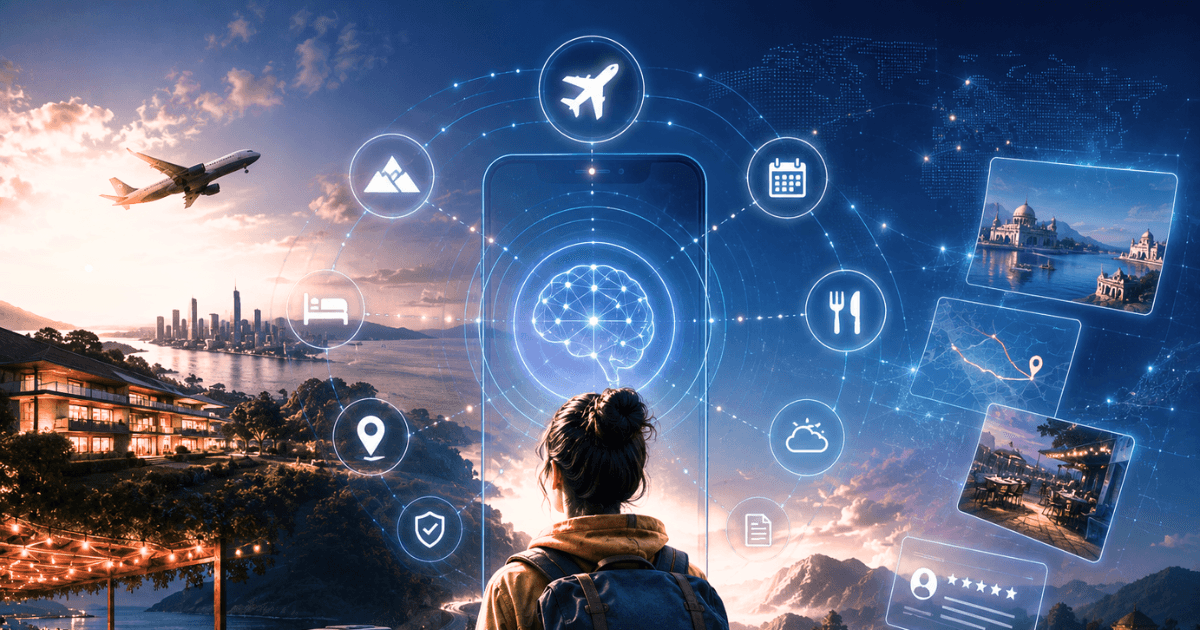
Travel technology is entering a different phase.
For years, innovation meant making individual parts of travel digital. Search became digital. Booking became digital. Maps became digital. Reviews became digital.
Now, the industry is moving toward something fundamentally different: technology that can understand the journey itself.
And the shift is no longer theoretical.
AI Is Already Changing How People Travel
In March 2026, McKinsey reported that although fewer than one-third of travelers had used generative AI for travel-related tasks, 84% of those who had used it said it improved their experience. General travel research was the leading use case, followed by inspiration and planning.
The direction is clear: travelers are increasingly comfortable asking AI what to do, where to go and how to structure their journey.
This is no longer about whether AI will enter travel.
It is about how deeply it will reshape the travel journey.
But There Is a Bigger Problem
Travel has an enormous amount of information.
What it lacks is context connecting that information.
A flight exists independently from a hotel.
A hotel exists independently from a restaurant.
A destination guide exists independently from today's weather.
A review exists independently from the person reading it.
The traveler is still expected to connect all of these pieces.
That is why adding another travel app does not solve the fundamental problem.
The next generation of travel technology needs to understand the relationships between them.
The Industry Is Moving From Search to Intelligence
The change can already be seen in how major technology and travel companies are positioning themselves.
The Financial Times described online travel platforms such as Booking.com, Expedia and Airbnb as rapidly integrating AI agents as they prepare for disruption across the $1.6 trillion global travel industry.
Expedia's 2026 research reveals an important tension within this transition: nearly 70% of travelers still prefer booking with trusted travel brands rather than AI chatbots or agents.
That tells us something important.
The future is not simply AI replacing travel companies.
The opportunity is to combine intelligence with trusted information, real-world data and human context.
And this is where the architecture of travel technology needs to change.
From Applications to an Intelligence Layer
Imagine a system that does not simply answer:
"What should I do in Jaipur?"
But understands:
You are visiting Jaipur for two days.
You prefer heritage and local experiences.
You have already visited Amber Fort.
It is raining this afternoon.
Your dinner reservation is across the city.
Traffic is building on your current route.
The answer should not be another list.
It should be an intelligent response to the situation.
This requires more than generative AI.
It requires predictive intelligence, real-time data, contextual understanding, trusted local knowledge and systems capable of interacting with the physical world.
The Role of Emerging Technologies
Generative AI can understand intent and create personalized travel intelligence.
Predictive intelligence can anticipate what may happen next.
Augmented reality can connect digital information with physical destinations.
Spatial computing can make travel information increasingly responsive to the environment around the traveler.
Together, these technologies can create something much bigger than individual features.
An intelligence layer across the journey.
Why Travel Needs an AI Operating System
The traditional travel stack was built around transactions:
Search → Compare → Book → Travel
But the actual journey is not linear.
Plans change. Flights get delayed. Weather shifts. Restaurants close. Travelers discover new interests. Local conditions change. New opportunities appear.
The technology should change with them.
That means moving from:
Tools → Intelligence
Search → Understanding
Recommendations → Context
Static itineraries → Adaptive journeys
Disconnected platforms → Connected ecosystems
This is what an AI Travel Operating System represents.
Not another booking app.
Not another chatbot.
Not simply another layer of generative AI.
But an intelligent infrastructure that can connect the fragmented travel ecosystem around the traveler.
The Next Travel Platform Will Not Just Help People Book
It will understand why they are traveling, what they value, what is happening around them and what they may need next.
That is the opportunity ahead.
At Movodream, this is the direction we believe travel technology is moving toward: from digital travel tools to an intelligent travel ecosystem that can understand the journey as it unfolds.